
I recently retired from my role as the executive vice-president of the Canadian Cattle Association, a position I proudly held for 36 years, and have been asked to author this month’s column. I will continue to serve in a part-time capacity as CCA’s chief policy advisor.
My journey in the cattle industry began in southern Alberta’s Porcupine Hills where I grew up in a great family on one of the most beautiful ranches in the world.
In 1981 I started working for the Alberta Cattle Commission as their market information and field services officer. Under the skilled leadership and mentorship of Chris Mills, I developed a passion for representing the cattle industry. I succeeded Chris as general manager in 1984. Chris continued his work to get rid of the Crowsnest Freight Rate, which was repealed in 1995. We advocated and participated in the successful negotiations of the Canada-United States Trade Agreement (CUSTA), which came into effect in 1988.
Read Also
Alberta fed cattle prices forecast to reach $335-345 per cwt. in Q2 2026
Alberta fed cattle prices are forecast at $335-345 per cwt. in Q2 2026, covering variable feedlot costs but slightly below break-even.
In 1988, Japan agreed to phase out its quota restrictions. With new and secure market access, we saw a great opportunity and formed the Canada Beef Export Federation in 1989 to market Canadian beef in Japan and soon thereafter throughout Asia. I served as its first executive director.
In 1990 I saw the biggest issues and opportunities were going to be national and international. I followed that belief and succeeded the legendary Charlie Gracey as the new general manager and executive vice-president of the CCA.
Trade expansion
The 1990s was the decade of trade liberalization with agriculture finally brought under the General Agreement on Tariffs and Trade when the World Trade Organization was created. New disciplines on subsidies and trade dispute provisions were created. CCA used these provisions to win a number of landmark cases including the defense against the European Union (Hormone Ban case) and the U.S. Mandatory Country of Origin Labelling rules. The North American Free Trade Agreement (NAFTA) replaced CUSTA in 1994. A new era of trade liberalization began, and we positioned our industry to succeed.
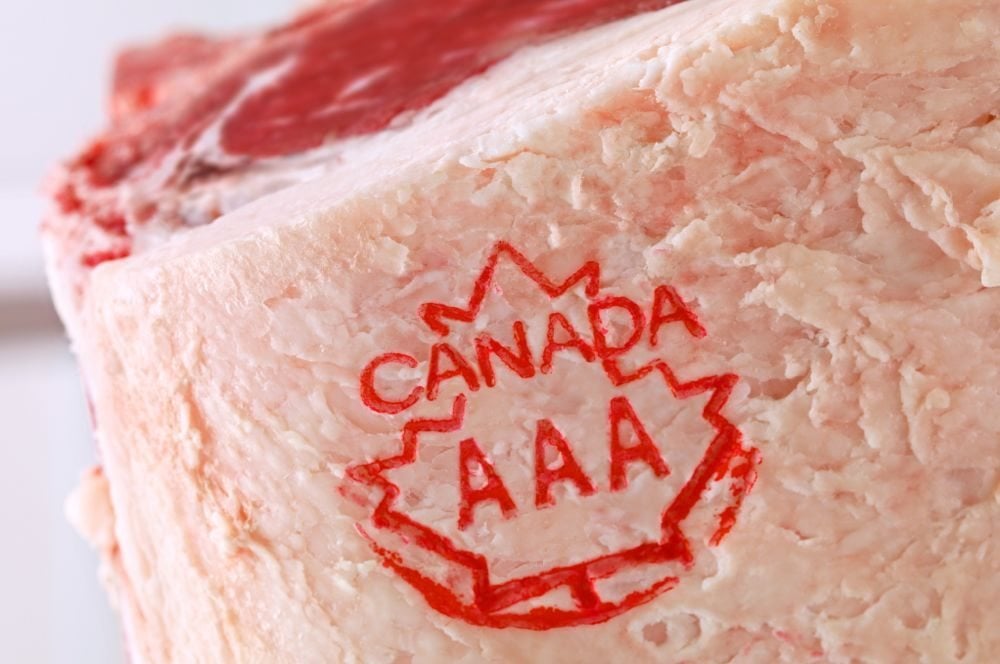
We believed our industry would become a world leader in high-quality beef production and set out to have Canadian products recognized as the best by customers at home and abroad. We changed our grading system, modernized our food safety systems and set out on a vision for quality beef.
Today, we export more than $7 billion to 59 countries and have some of the highest customer satisfaction scores we’ve ever seen.
I have always believed we can do anything as well or better than anyone else in the world if we have the right environment to succeed and if we invest in our future.
Market resilience
I have seen the best of times and the worst. If you were in the cattle business, you would remember where you were on the morning of May 20, 2003. Every export market closed that day, and we saw our entire market system become paralyzed. Thanks to our proactive work in the ’90s we had effective measures in place to prevent the spread of BSE and to demonstrate to Canadians and our world customers that our beef was safe. Canadians rallied in support of our industry and our NAFTA partners reopened their market to our beef in August 2003. The beginning of the road to recovery became possible, and the world changed how it responded to BSE.
2010 began the decade of real recovery and reopening of all remaining markets. We fought and won the U.S. Mandatory Country of Origin Labelling case and initiated trade actions against countries that had not yet reopened. In 2018 the Comprehensive and Progressive Agreement for Trans-Pacific Partnership was signed, and we gained preferential access to the Asia-Pacific region. We strongly advocated for the agreement and attended all of the negotiations. This region will be the most important growth opportunity for high-quality beef.
The ink was barely dry on the Comprehensive and Progressive Agreement for Trans-Pacific Partnership agreement when the renegotiation of NAFTA was demanded by the U.S. CCA and our allies in the U.S. and Mexico met immediately and communicated our strong support for continued tariff-free trade. We attended every round of negotiations. In 2020, the new Canada-United States-Mexico Agreement (CUSMA) was signed. Our tariff-free access was preserved.
Now we face a new threat to the agreement and freedom from tariffs.
A review of CUSMA is mandated for July, and all three members have commenced preparations for a full review and likely renegotiation.
The current U.S. administration views tariffs as both an effective negotiating tool and source of revenue. The threat of tariffs is very real.
We have stepped up our U.S. advocacy work to fully engage at both the state and federal levels.
We have increased our Washington advocacy with regular Congressional meetings and participation in Canada-U.S. advocacy groups.
We are meeting regularly with our many allies in the United States who strongly support maintaining the CUSMA. On Oct. 30, 124 U.S. agriculture organizations submitted a letter of support for a full 16-year renewal of the agreement.
We can expect a number of twists and turns in this review/negotiation including the threat of withdrawal. We are ready and will be fully engaged.
In spite of these dark clouds to the south, I have never been more excited about the future of our beef cattle industry and Canadian agriculture. We have persevered through worse, and I truly believe the world needs more Canada.
I also truly believe there has never been a greater need for a strong and unified national and international voice for our great industry. CCA is that respected voice.