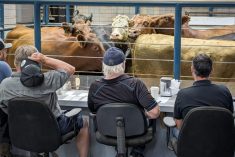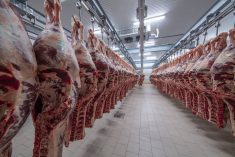


Alberta packers bought slaughter cattle in the range of $110-$112 per hundredweight last week, down $3/cwt from a week earlier in June. Packers have finished purchases for the July 4 weekend; therefore, the market was experiencing softer demand.
Sluggish fed cattle prices caused feeder cattle to trade $2-$5/cwt lower in comparison to a week earlier. Lighter-weight feeders under 500 pounds were steady with week-ago levels. U.S. direct slaughter cattle traded $3 lower in Kansas at $119/cwt. Auction market volumes continue to decline in line with the seasonal tendency.
Read Also

ICE Weekly: More to canola price gains than Middle East war
The Middle East war is not the only thing affecting canola futures on the Intercontinental Exchange, said Tony Tryhuk, director of futures trading for RBC Dominion Securities in Winnipeg.
Mixed age-verified steers averaging 620 lbs. sold for $152/cwt in the Edmonton area. Angus-cross steers weighing 720-760 lbs. sold for $155/cwt in central Alberta but similar cattle were selling $4-$5/cwt less in other parts of Alberta and Saskatchewan. Weight-controlled backgrounded mixed heifers weighing 800 lbs. sold for $130/cwt in southern Alberta.
The industry is expecting Friday’s U.S. Department of Agriculture report to show a large year-over-year increase in May placement numbers, which will result in larger-than-expected cattle on feed. The deferred futures appear to be factoring in a larger supply situation in the fourth quarter. However, lighter-weight feeders that will be sold in the first quarter of 2013 are firm as February live cattle futures carry a $5 premium over the October contract.
Lower gas prices and stronger equity markets were not able to turn the cattle market higher. Consumer confidence has fallen since April due to slow hiring and a depressing business environment. Uncertainty over Europe has also plagued headlines and the negative news has put fear into the average consumer. There appears to be a contraction in household expenditures after the overly optimistic spring splurge.