

CFIA traceability regulations
Karen Briere, Glacier FarmMedia
The Canadian Food Inspection Agency says it will hold off on posting new traceability regulations for now.
The agency issued a statement Jan. 10, after public confusion about whether the amendments to the Health of Animals Regulations, announced in 2023, were actually in force. Some thought they took effect Jan. 1, but they had not yet been introduced in Canada Gazette, Part II, which is a key legislative requirement.
Read Also
Coronavirus vaccine reduces respiratory disease treatments in beef calves
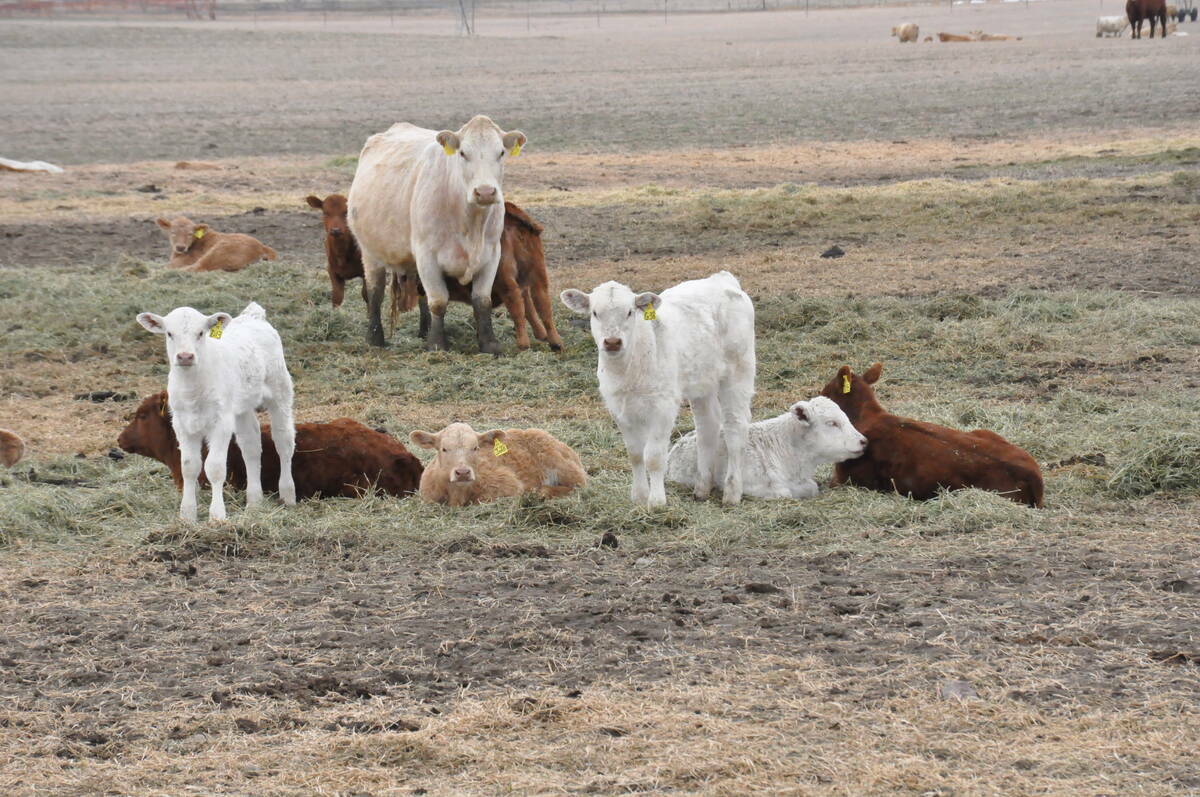
A clinical trial on 887 calves tested whether intranasal bovine coronavirus vaccination at birth could reduce respiratory disease treatments.
CFIA had expected to publish the regulations, developed along with industry organizations, in the spring. They would have included required premises identification numbers to purchase ID tags, movement reporting when cattle leave their home operations and reporting the arrival of cattle within seven days.
Producers said these regulations would be costly and onerous.
During the first week of January, provincial and national beef organizations issued statements about the issue, noting the regulations weren’t in place but also that producers had concerns. Some asked for CFIA to postpone the introduction until these could be addressed.
That weekend, CFIA said it was aware of the concerns.
“These amendments are not currently in place and have not been finalized,” CFIA said.
“The CFIA has consulted with industry, associations and governments regarding the proposed amendments and will continue to do so. The CFIA will pause any publication of the regulations until the proposed changes are more widely understood and concerns are heard and taken into consideration.”
Some producers on social media suggested CFIA had “snuck” in the regulations late last year as a way to exert control over them. But the draft regulations were published in Part 1 of the Canada Gazette in 2023 and a 90-day comment period followed. The agency published a What We Heard report in 2024 to summarize what it had heard.
The proposed changes will be phased in once they are published.
Canadian cattle groups look to renew national organization
Diana Martin, Glacier FarmMedia
A review and potential reset of the Canadian Cattle Association were the focus of a two-day meeting of provincial beef association representatives.
“We found a very unified group that all have the same interest at heart and that’s to make a strong national committee or revamp to make it a strong one,” said Kevin Boone, British Columbia Cattlemen’s Association general manager at the Dec. 9 meeting in Toronto.
In August, Alberta signalled its intention to leave the CCA, putting the sector’s national representation at risk.
“CCA is a pretty old, established organization, and I think that every now and again, you’ve got to step back and take a look at what you have and how you’re structured,” said Boone.
If the industry and CCA as a whole want to remain at the top of their field, the provincial members need to provide that direction, he added.
“They’re there to steer the ship, but it’s the directors from every province that are there to tell them how much steam to put in it and where and which way to turn.”
Boone said there isn’t any best time to address the potential fracturing of an organization. However, providing a toolbox of directives from members could help them build forward.
Alberta’s concerns extensive
“It started as a withdrawal,” said Doug Roxburgh, ABP chair, of Alberta’s stance with the CCA. “But I think it’s very much become more of a review.
“It’s been amazing to see what other provinces have had for both positives around CCA but also concerns.”
Alberta’s list of concerns is extensive, said Roxburgh; however, commonalities between provinces and an openness to change fostered positive discussions. The group will craft a review framework to present to the CCA, likely in the spring.
“We went into these meetings with a positive mindset, that we’re coming here to improve our organization,” said Chad Ross, Saskatchewan Cattle Association chair.
“It’s healthy to look at governance, communication, financial reporting and funding and find solutions that are good for everyone.”
New Brunswick Cattle Producers chair Trevor Welch said CCA’s representation at the federal level is critical. There are no plans to eliminate the organization. Rather, they will explore restructuring options to ensure it remains sustainable, financially responsible and “more palatable for all the provincial organizations to work with.”
He acknowledged that six or seven months ago, the provinces weren’t sure what to do or how to handle the potential fracturing of the CCA. The workshop showed they were aligned on “nitty-gritty” issues and were willing to work together to find a way forward.
Ross agreed, and while hesitant to give specifics, mentioned “a-ha” moments during the day. He highlighted the need to streamline communication to ensure grassroots voices are heard and to contribute to business plans, strategies and collaborations within provinces and national organizations.
“Then there’s funding it, and that’s always the hard question. How do we fund it all the way across Canada? It’s not going to be equal,” Ross said.
“I think there’s got to be some give and take. How do we negotiate that with the different provinces to be in the federal organization, get it funded and get it working?”
Looking for a better balance
Roxburgh said Alberta believes in a strong national organization that is appropriately funded, but “it can’t come on the backs of Alberta being underfunded within our own province.”
He doubted Alberta beef producers would reach 50 per cent representation based on funding, nor does he want to see less representation for other provinces — but he suggested that’s not the main question.
“I think the question is, how do we build this structure that’s the most effective for not just the producers today, but for our industry going forward?” Roxburgh said. “Things are changing all the time. It’s just about trying to figure out a little bit better balance right across the board.”
Beef Farmers of Ontario president Craig McLaughlin said the real challenge lies ahead — namely, in fine-tuning the funding model to ensure CCA’s sustainability without harming the provincial organization’s budgets, and negotiating representation.
“We feel there’s a time for change, and it should happen now when we’re going to get a new executive director at the national level,” said McLaughlin. “(The recommendations) will help them foster better relations across the provinces.”
Anti-coal petition continues despite setback
Greg Price, Glacier FarmMedia
The truck may have got stuck in country lore, but recording artist Corb Lund is confident his anti-coal mining petition won’t suffer the same fate.
His previous petition, which had been approved by Elections Alberta, was cancelled after the provincial government passed Bill 14 with some amendments in the fall session of the Alberta legislature.
It forced Lund’s petition team to reapply to get the petition approved under stricter rules, which he has noted has left him and his petition team undeterred.
Many Alberta ranchers and other agricultural producers have voiced their concerns on how coal mining may affect their livelihood and the environment.
Premier Danielle Smith had encouraged protesters at a town hall in Fort Macleod in June to pursue a petition to let their feelings be known, only to have amendments in Bill 14 make changes to citizen referendum rules, forcing the petition team to go back to the drawing board.
“I think a lot of people worked really hard to put in an acceptable application,” said Laura Laing of Plateau Cattle Company, one of a handful of ranchers west of Nanton who inspired Lund to launch his petition.
“It was approved, a lot of work was done to here, and now we have to jump through another hoop.”
Laing’s ranch helped commission an air-quality impact study from the Pekisko Group, while organizers approached MLAs with information about removing selenium from water, environmental impacts from Alberta mining and studies conducted by Colin Cooke, a senior aquatic scientist with the Alberta government.
Concerns range from selenium levels downstream from mines, destruction of native grasslands, overall air quality and long-term employment stability of coal mining in economic forecasts.
“What we best understand is that the government has purchased back the leases on the Mount Livingston range, which is directly within our forestry allotment where we graze our cattle,” Laing said.
“We’re expecting that Grassy Mountain is exempt from any of the modernization initiatives that are coming forward in the new year.”
She said previous coal-mining initiatives that were rejected at both the federal and provincial levels in the past have once again been resurrected.
Laing and Lund said they are not against resource development, but rather how potential effects on agriculture are often pushed into the background.
“Downstream effects, it’s hard to judge them and that’s the problem. Lethbridge has a huge food processing industry and we aren’t sure it will affect it. Back in the 2000s, China wouldn’t buy our pulse crops because of elevated selenium,” said Lund.
“If Japan has the option to buy potatoes from us where there’s a coal mine upstream or fill-in-the-blank where all other things are equal, they are going to go with the one that doesn’t have a coal mine upstream. With the drought we’ve been in for the last five or six years, where is the water going to come from? It will come from the Old Man watershed.”
Lund said he is frustrated with the provincial government telling public meetings and podcasts that it has shut down various coal ventures when it hasn’t.
“Her (Danielle Smith) tack was, ‘Why does Corb and his people not take yes for an answer?’ We’ve stopped all the mining … except for Grassy Mountain, except for Mine 14, except for Blackstone, except for areas in the Red River area,” said Lund.
He said he isn’t the only one opposed to coal development in the eastern slopes of the Rockies, pointing to various surveys since 2021 that have found opposition in the 70 to 80 per cent range.
Laing worries that the recent developments have damaged public trust in the province.
“I think, unfortunately, a lot of trust has been lost throughout this process, with how our energy regulator works, with how our government makes decisions and who they listen to. It’s certainly not the agriculture industry. It is a little bit of a David and Goliath story. You’re going up against some pretty influential people with really deep pockets and industry,” said Laing.
“I commend Corb for his integrity and tenacity and staying on this, and bringing the petition forward using his platform. But also his integrity as a sixth-generation Albertan. Here’s the opportunity for Alberta to voice whether they’re in agreement or not, and this is of our premier’s own design.”