

What a year 2025 was, and what a year might lie ahead for the U.S. beef industry. I began writing about the industry in the fall of 1986, when I became the first journalist to write a detailed profile of IBP, Inc., which eventually became the red meat arm of Tyson Foods. I have now entered my 39th year of following the industry and writing about it.
My observations during this time are numerous. Here, in no particular order, are some of the things that have particularly struck me.
Bridging the producer-packer divide
Read Also
Sweat equity or just sweat? What labour means for profitability on cow-calf operations
A look at how labour intensity, herd size and calving season shape profitability across Canadian cow-calf operations.
I quickly realized that there was a huge gulf between many cattle producers and those companies that bought and harvested their animals. From the start, I attempted to be an independent and impartial observer, but I was accused in the early years of being a “pawn of the packers.” That made me realize that some people didn’t even want to understand packers, even though they are essential for their survival.
Thank goodness this negative attitude gradually gave way to the realization that packers and producers need to be partners, not antagonists, and that they need to work together to achieve the most important goal of improving beef’s eating quality and thus strengthening the demand for beef.
That the industry has reached those goals is, in my estimation, its most important advancement in the last 35 years.
Evolution of quality and value
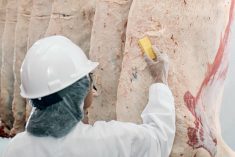
Whereas one out of four steaks was tough in the 1980s and early 1990s, the industry today is producing a very high quality of all cuts of beef. During the same period, quality grading of carcasses has gone from below 50 per cent Prime and Choice to a percentage that every week is just more than 84 per cent. That’s the best measurement I know of to show how quality has improved.
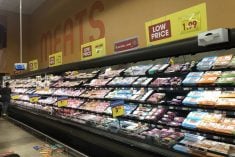
The other measurement is how Americans last year responded to record-high retail beef prices. Prices topped out last October, although the November All Fresh retail price at US$9.40 per pound was still 16.6 per cent higher than in November 2024. The Choice price at US$10.08 per pound was up 21.2 per cent on the prior year. Consumers seemed unconcerned about these prices, in large part because they saw the value equation. They realized that prices were high but they were receiving even better-quality beef than ever before.
Politicizing the meat case
It was therefore extremely disheartening that the Trump Administration last November tried to politicize the high beef prices. Trump claimed that meat companies were raising beef prices through collusion and price fixing and called on the Department of Justice to investigate. None of his accusations have any merit. In fact, his accusations were far more spurious than other claims against packers in the past 35 years, all of which were found to have no evidence of any wrongdoing by any packer. A new investigation would be a waste of the government’s time and would only cause packers to spend a lot of money on having to defend themselves.
Trump further muddied the waters by vowing to bring in thousands of tons of Argentine beef, although he offered no explanation as to how he was going to do this.
The U.S. cattle and beef industry has long prided itself on being independent and protecting its interests against interference by the federal government. I urge it to continue to do this in 2026. It will certainly need to as beef demand in 2026 will again exceed the supply of beef and keep consumer beef prices at record-high levels. The last thing the industry wants is a price freeze on beef such as then-president Nixon imposed in the 1970s. c