

CNS Canada — Chicago Board of Trade corn and soybean markets trended slightly lower during the week ended Wednesday, but weather concerns for both grains helped keep the bottom from falling out.
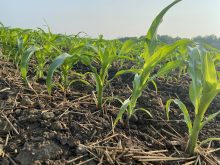
“We’re a little dry out in the west here and we’re probably too moist, east and southeast,” said Brian Rydlund, a market analyst with CHS Hedging in St. Paul, Minn.
“We’re too dry in the Dakotas and western Minnesota. That’s what people are talking about,” he clarified.
Planting progress reports from the U.S. Department of Agriculture are being watched more and more carefully as spring planting looms, he said.
Read Also
Klassen: Stronger fed market pulls feeder cattle complex upward
For the week ending April 11, Western Canadian feeder cattle prices were steady to $5 higher on average compared to seven…
“It’s a combination of weather and technical and fundamentals that are probably a little bit heavy for both of the commodities,” he said, adding the selloffs began a few weeks ago.
From a technical standpoint, soybeans had a volatile week, starting out last Wednesday at $9.65 a bushel (May contract) before dipping down below the $9.50 mark and then ending above $9.70 (all figures US$).
Corn was locked in a similar pattern, ultimately ending just 3.25 cents above its starting position for the week after a few wild swings in between.
“Technically corn and the other grains are back down on their knees again here,” said Rydlund.
Simple incidents like a change in the weather forecast had moved prices substantially, he said, even though the change was relatively minor.
“It’s very prone to moving up or down on weather events.”
The strength of the U.S. dollar reportedly continues to act as a bearish force for U.S. exporters, but Rydlund said its real impact may be slightly exaggerated.
“Some days the strength of the U.S. dollar doesn’t seem to make a difference; other days it’s a front-burner item.”
— Dave Sims writes for Commodity News Service Canada, a Winnipeg company specializing in grain and commodity market reporting.