
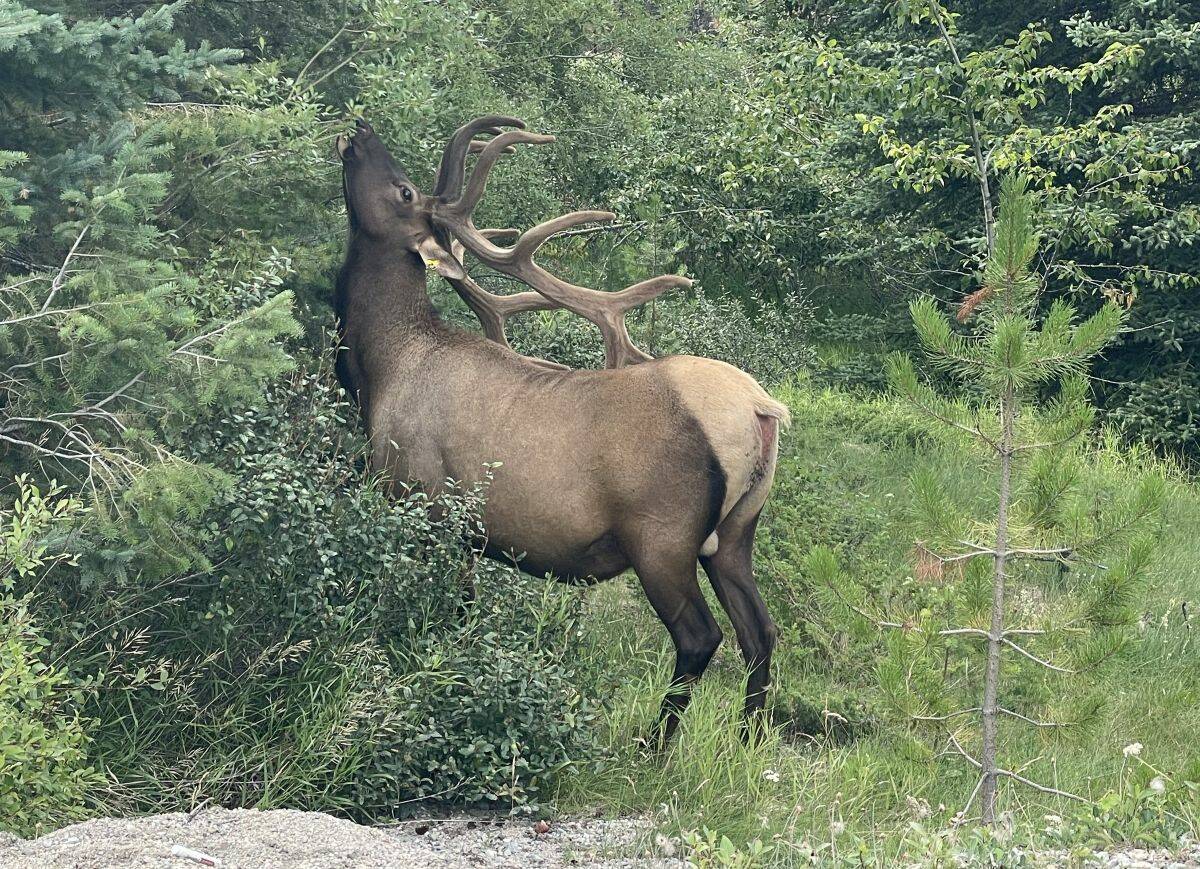
This article originally ran in the September/October 2025 issue of Beef in B.C. as part of a larger package on elk and is reprinted with permission. It was transcribed from a video produced by the Kootenay Livestock Association and has been lightly edited.
My great-grandfather came to this area in the early 1900s. My grandfather didn’t tell me a lot about the elk, because there was no elk here then. And even my dad says that when they were growing up, there was no elk here.
I think they said there was some elk down the valley, and they would come out of the mountains in late fall, and they would winter down near the Pickering Hills and Frenchman Slough area, and down towards the river there. But never here, there were no elk up this way when my father and grandfather were young.
Read Also
Manitoba beef producers target exploding elk, deer numbers
Manitoba Beef Producers urge the province to curb surging elk and deer numbers, improve damage compensation, and secure Crown land stability.
By the beginning of August, we will see herds of upwards of 200 head in the evening. They just come pouring out of the trees onto the field.
It can easily be 200 and I’ve seen nights when there’s probably 400. How do we feed that? How do we feed that many and our cows — this is what we’re faced with. In the spring, as soon as it starts to try and green up, the elk will be on it.
And I always say, whatever it’s able to grow during the day, the elk come and take it at night until it gets warm enough that the plants can finally get ahead. But how much damage has been done to the plant by the time that happens? We see this so we try and get the cages out. A cage is a four-foot by four-foot cage that they can’t get at. This shows what that field is producing without the wildlife hampering the growth. So, we have to get those cages out, and then we use that as one of the indicators of how much crop has gone missing. When you see what’s in the cage, and you see what’s not there outside of the cage, I always think, man, if this whole field had what’s in that cage, we would have not a worry in the world.
And I guess you have to understand that the feed to us — the grass — whether it’s for a hay crop or an irrigated pasture, that’s like money in the bank. It’s the same if you had some savings in the bank, and it was going missing every day — you just get this empty feeling in your stomach. We just think — what are we going to do? How do we deal with this?
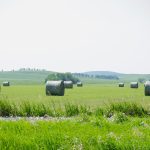
We mostly do one cut. We would like to do some second cut, but it’s been probably seven, eight years since we’ve done any second cut, just because we can’t feed the elk and do second cut and also have enough feed to get through the fall for the cattle.
So last year, right at the beginning of August the elk had been coming and we would see them any time after supper time. We can see this field from the house quite well, but we can’t see the south end of the property. We knew the elk were coming and it’s been getting worse and worse every year.
The one night I had to go down to do something with the pivot down there. It was just getting kind of dusky, getting towards dark. And everywhere I looked, there were elk. And the farther I went south — I figured, all the elk are on the north end — but no, the farther south I went, the more elk I found. And I’m just estimating, but I would estimate there were over 500 head here that night.
And the field on the south pivot, I hadn’t actually looked at for probably three days. And when I got up there to do whatever I was doing, and I looked, I could just see the regrowth was gone. It was gone. It was like I had gone and cut it, only there was no swath. It was gone. I couldn’t believe it.
So, I just thought, well, I have to do something because we’ll never make it. And so obviously that many elk had been coming for a few nights unbeknownst. I went back to the house and I started a pot of coffee and my wife and my daughter said, “What are you doing?”
And I said, “I’m making a thermos of coffee. I’m going to be out there all night.”
I said, “I have to do something. We will not have anything to get the cows through the fall if I don’t try and do something.”
And so, I went with the side-by-side and just kept moving them off all night. And I did that the whole month of August into September.
But we had already lost a lot. So last year we actually had to sell the calves at least three weeks ahead of what we normally do.
These are not our animals. We’re not responsible for them. And yet we can’t do anything.
Everything we do, throughout the whole year now, we’re always thinking about how the elk are going to affect us. If we do this, if we do that when we’re feeding cows in the winter, where do we feed?
We learned that we can’t feed at night. We have to feed in the morning, because if you feed at night, they’ll just come and take it all. They will come in the daytime too, but not as much and you can control that a little more.
A lot of guys, when they were feeding heifers or bulls or something, they would put a big bale in a big feeder, and then the cattle would self-feed out of that feeder. You can’t do that anymore because it’ll be all elk at the feeder.
The other thing that just tears me up a lot is we have more land that we can improve and seed and irrigate to make pasture but we haven’t done it because what’s the point? c