

In a previous column, I discussed the how the U.S. Federal Reserve and the Bank of Canada have lowered interest rates to stimulate the economy. In many cases, the central banks overreact at the first signs of rising unemployment.
The U.S. Federal Reserve’s benchmark rate was in the range of 5.25 to 5.50 per cent from December 2023 through September 2024. At the time of writing this article in January, the interest rate was in the range of 3.50 to 3.75 per cent. The Bank of Canada’s key interest rate reached up to five per cent during 2023 and the first half of 2024. Its current rate is 2.25 per cent. A couple of financial analysts that I follow have stated that besides the COVID era, there have only been two other periods in the past 40 years when monetary conditions were this loose.
Aggressive government fiscal stimulus has come on the heels of the lower interest rate environment. According to the Fraser Institute, the deficits from the Carney government over the four-year period from 2025-26 to 2028-29 will equal a combined $265.1 billion. The Trudeau government had only planned deficits of $131.4 billion during those same four years, so this is a considerable increase. South of the border, Donald Trump has said the U.S. government plans on sending $2,000 tariff dividend cheques to individuals with moderate incomes in mid-2026. This must be approved by Congress, but there is a high probability of a payout. In any case, Trump has stated this will be the largest tax refund in history.
Read Also
CALVING 2026: Keep those newborn beef calves healthy
Biosecurity, vaccines, vitamin injections and colostrum — veterinarian Roy Lewis runs down how beef farmers can keep newborn calves free from disease and gaining weight fast.
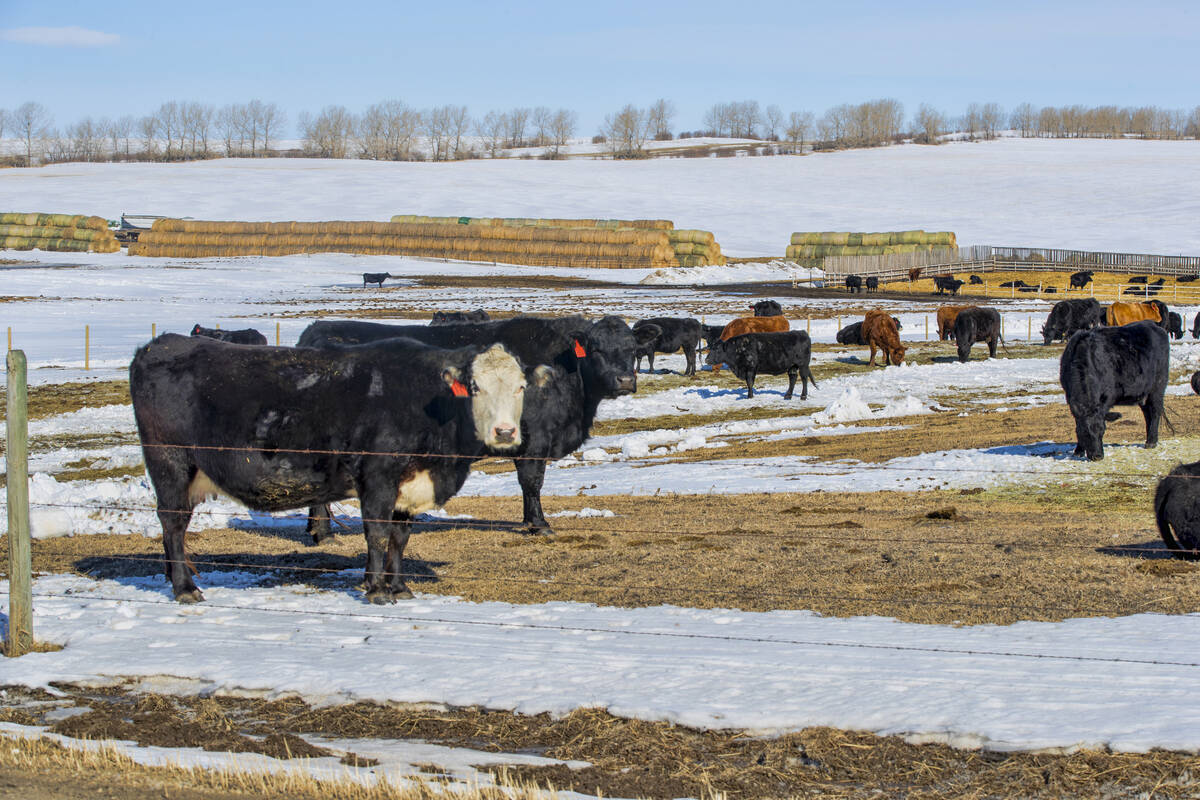
During 2020 and 2021, there was massive monetary and fiscal stimulus, which set the beef market up for unprecedented beef demand. Unfortunately, cattle producers were short-sighted during this period and contracted the cattle herd. The lower cattle prices during the COVID recession and subsequent years caused cow-calf producers to downsize their operations. Of course this is the wrong market behaviour.
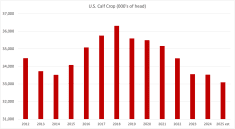
Government data shows that cow-calf producers decreased their herds until 2025, upon which time we saw cow slaughter drop to historically low levels. There was also marginal heifer retention on both sides of the border, although we need the Jan. 1, 2026, inventory reports for confirmation.
The cattle market is now in a similar environment to the late 1970s and early 1980s. From 1980 to 1983, cattle producers on both sides of the border expanded their herds when interest rates were at historical highs. Interest rates were at higher levels due to “out of control” inflation.
I believe we are now heading into a similar period. Cattle producers on both sides of the border are expected to expand the cattle herd over the next three to four years. Cow-calf producers are responding to the higher price environment.
Interest rates are currently at lower levels; however, we’ve seen how quickly the central banks will respond if inflation becomes a concern. Keep in mind that the U.S. Consumer Price Index (CPI) for November came in at 2.7 per cent on a year-over-year basis, down from the September year-over-year gain of three per cent. In Canada, the November CPI rose 2.2 per cent on a year-over-year basis, down from the September reading of 2.4 per cent year-over-year. In both countries, the CPI has been decreasing, but it’s still above the target level of two per cent. The central banks have lowered rates while inflation remains elevated.
Inflation will start to percolate higher later in 2026 as the fiscal and monetary stimulus moves through the economy. U.S. Gross Domestic Product is on track to reach five to six per cent for the second and third quarters of 2026, which will cause beef demand to reach fresh historical highs.
Later in 2026 or in the first half of 2027, we expect that both central banks will start to raise interest rates in an effort to curb inflation. By the end of 2028, interest rates will likely be three to four per cent above current levels, which will be 30-year highs. Governments will also rein in spending to ease inflationary pressures. During 2028, inflation could be increasing by a rate of six to eight per cent year over year.
If the Canadian and U.S cow-calf producer starts heifer retention in 2025 and 2026, the calves from these heifers will only come on the market in 2027 or 2028. The cattle producer will be adding more supplies to the market at a time when beef demand is decreasing. It’s shaping up to be exactly like the early 1980s. Interest rates were at historical highs, consumers and businesses were holding back on spending and investments, and the cattle producer expanded their herd for three to four years.
In conclusion, the outlook for the cattle market has changed from October 2025 due to lower interest rates and enhanced fiscal stimulus. It’s important that cattle producers look at the macro picture when making long-term plans for their operation. Historically, cow-calf producers contract their herds during economic recessions and expand their operations when the North American economy is at the peak of growth potential. They should be doing the opposite. More importantly, the key is that you have to expand your herd a little bit each year. Try to expand more aggressively when interest rates are at lower levels or during recessionary or slower economic growth periods. No pun intended, but you have to behave in the opposite fashion of the herd. c