

Calving season brings an array of well-known challenges — scours, breech births weather complications. Premature calves are less talked about, but they’re a real management issue, and there are steps producers can take to give them the best chance of survival.
“I think it’s almost everything we would say for a normal calf, but more so,” says Chris Clark, an associate professor at the Western College of Veterinary Medicine.
WHY IT MATTERS: Premature calves are a reality of calving season, and knowing how to act fast can mean the difference between losing a calf and getting it through. The steps Clark outlines are within reach of any producer — but timing is everything.
What causes premature births
Sometimes calves simply arrive early with no clear reason. But Clark identifies two main causes worth watching for: abdominal trauma and fetal stress.
Abdominal trauma — caused by a cow being kicked by herdmates, which is more common during feeding and moving — can trigger early delivery. Fetal stress, caused by placental problems or disease, can also prompt the body to accelerate.
Read Also
Canada’s beef traceability rules on hold as producer backlash grows
Proposed changes to regulations are on hold after widespread producer opposition forced the CFIA to pause publication of the amendments.
“If the fetus becomes stressed, you start to see hormones going into the circulation that sort of accelerate maturation and can lead to an early parturition,” Clark says.
The window that matters
Not all premature births are equal. A calf born up to two weeks early is far more manageable than one born earlier than that, because lungs are the last organ to fully develop.
“When we’re talking about managing the premature calf, it’s quite a narrow window in the grand scheme of things, because if they’re born too early, nothing’s going to save them,” Clark says.
First priority: get colostrum in
If a premature calf hits the ground, Clark’s first recommendation is colostrum — fast.
Premature calves are smaller than full-term calves, which means they lose heat faster and struggle to get on their feet. Colostrum delivers the nutrients and essential antibodies they need to start fighting.
“We could have had a conversation just about the significance of colostrum and newborn calves, but when you’re talking about these premature neonates, even more so,” Clark says.
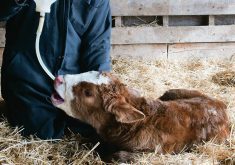
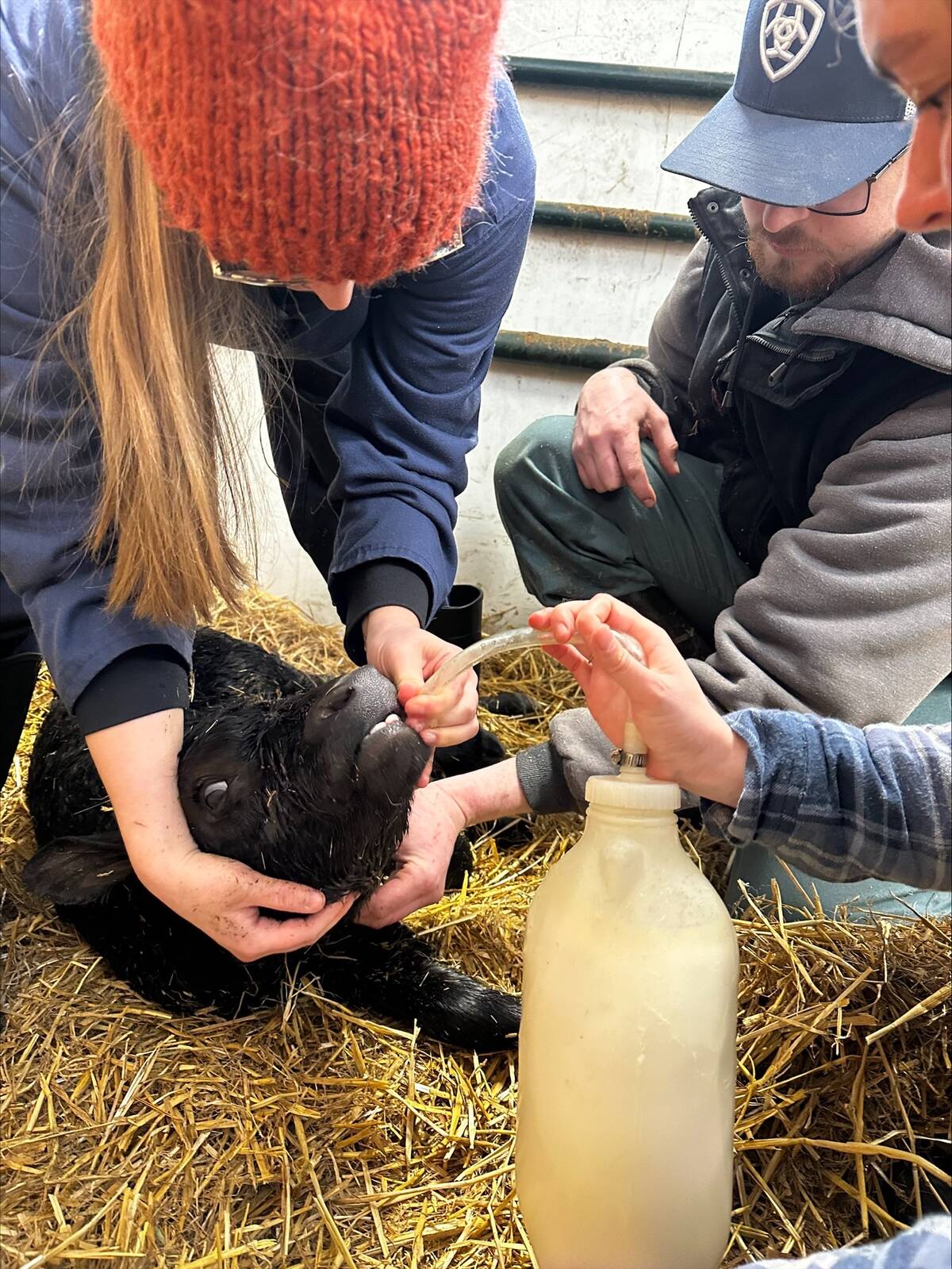
Clark recommends an esophageal tube rather than a bottle — a weak calf won’t have the strength to suck effectively. If the calf has a poor swallow reflex and can’t take a stomach tube, that’s the time to call a vet.
“It’s when you realize you’re not going to be able to get a stomach tube into it, and the calf is getting really depressed and flat and unable to lift its head — I think those are the ones that will benefit from having a veterinarian take a look at it.”

Keep the cow in the picture
Clark’s other key recommendation is to keep the premature calf with its mother whenever possible.
“The mother is the ultimate life support system. And if we can get this calf over this hump, get it standing and get it nursing, then the mother’s got her job to do, to look after it.”
Producers may need to tube feed multiple times before the calf can stand independently. The goal is to continue intensive care until the calf can stand on its own, follow its mother and nurse without help.
“You’ve got to accept that it’s going to take them a little longer. Rather than just tubing them with colostrum, you may be tubing them with milk for several days.”
The case for later calving
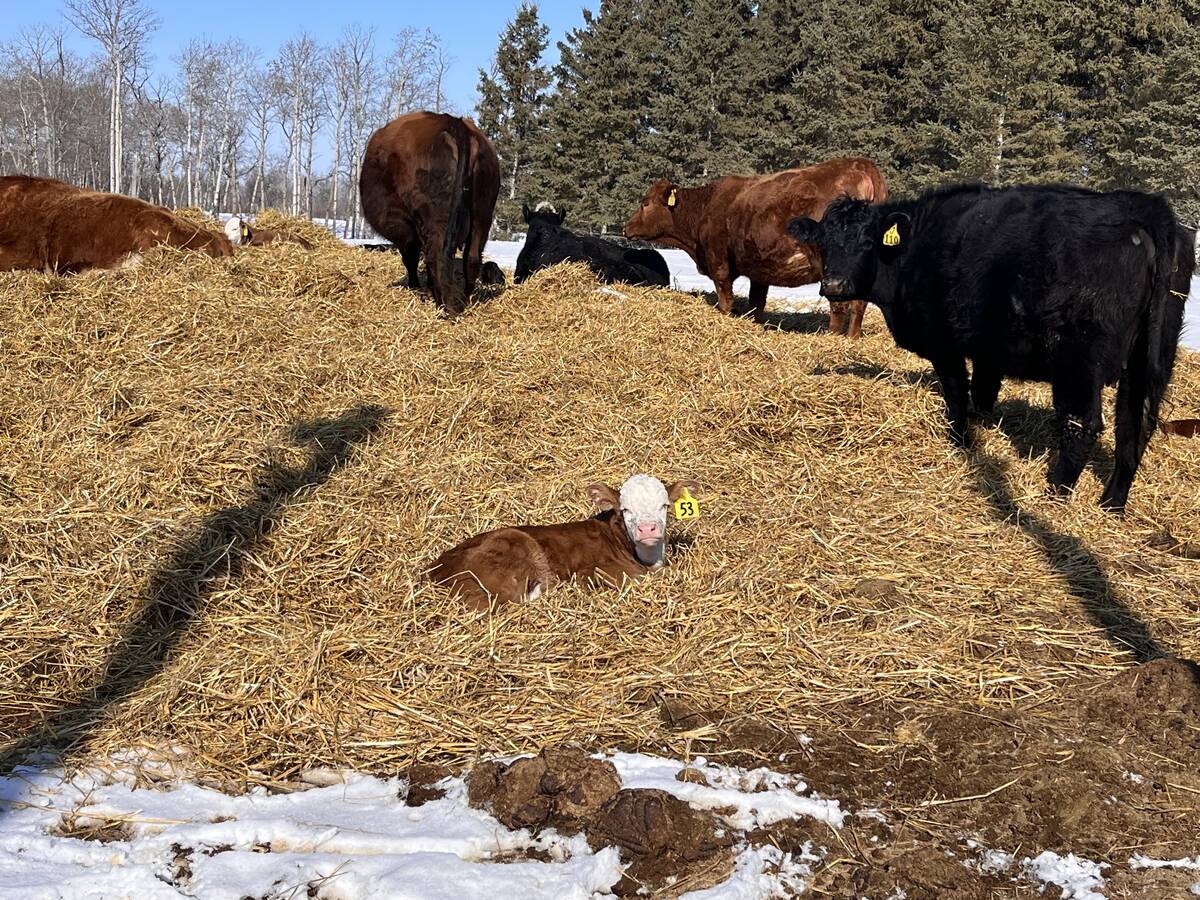
Clark sees a direct connection between the industry’s shift toward May and June calving and the decline in sick and premature calves he now sees at the WCVM clinic.
“The clinic was wall-to-wall sick calves. But it’s been really interesting over the last 30 years with the move to calving out in May and June, and I think it’s a new generation of producers who educated themselves much more. So, it’s fascinating to me how few calves we see now.”
Calving at pasture — with space, growing grass and less crowding than corral pens — creates conditions where calves and cows are simply healthier.
“I think cattle calving at pasture with space where you’ve got the grass starting to grow, and you’ve got that great natural food source for them, and the ability to feed out at pasture rather than feeding in corral pens, is all a benefit,” Clark says.
Clark stops short of saying later calving prevents premature births, but believes the overall health benefits are real and measurable.
Long-term outlook
Clark says there are no tangible management practices that reliably prevent premature births. The good news is that calves that make it through those first critical hours or days often show no long-term effects — a finding that echoes what’s seen in premature human infants.
“I do think the producers have generally gotten much more comfortable looking after these calves,” he says.